PORTICI, Italy
13 October 2026
The 8th International Conference on Duckweed Research and Applications (ICDRA 2026) was held from 28 September to 2 October 2026 in Portici, Italy, and hosted by the Department of Agricultural Sciences at the University of Napoli Federico II. The conference brought together global leaders in plant biology, biotechnology, and sustainable agriculture under the theme “Model plant and novel crop, the thousand faces of duckweed“.
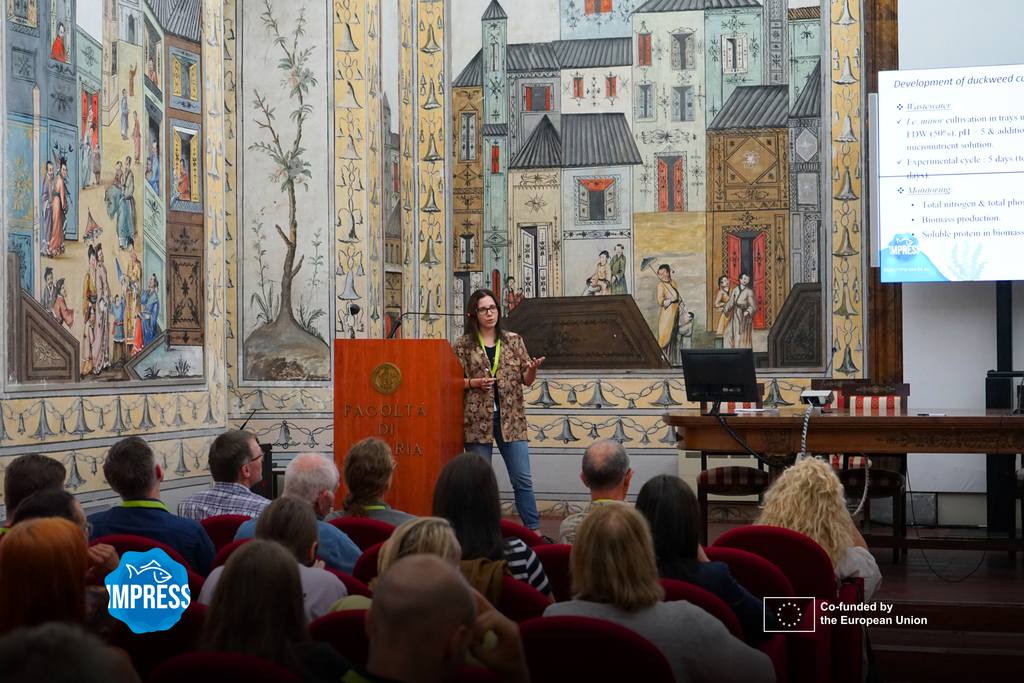
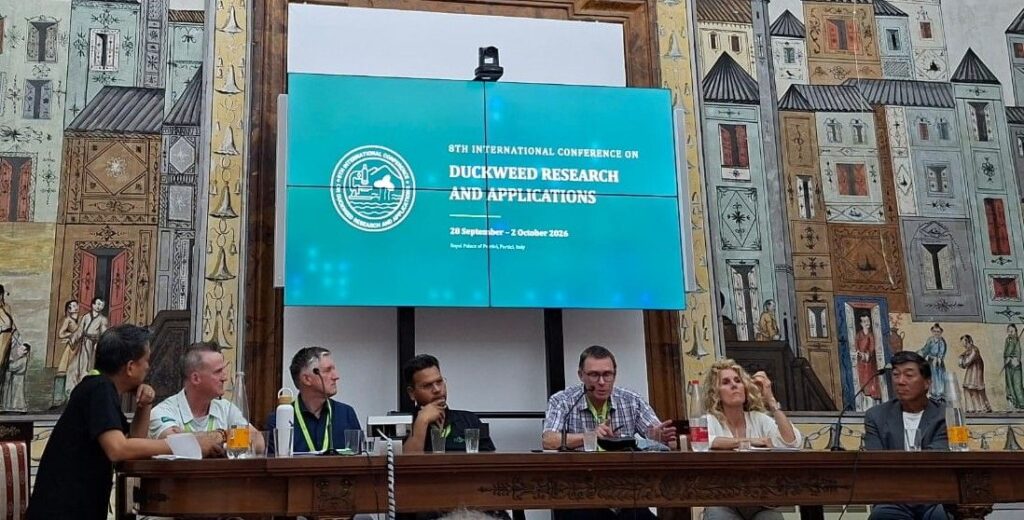
The event showcased key breakthroughs in duckweed genomics, microbiome interactions, wastewater remediation, and novel food/feed production. Taking centre stage at the event, the EU-funded Horizon Europe IMPRESS project showcased tangible applications for these rapidly growing aquatic plants. Notably, researcher Alexandra Katsara presented project findings on utilizing duckweed for the remediation and resource recovery of industrial fish filleting wastewater. Furthermore, Prof. Marcel Jansen of University College Cork, who co-authored the study and contributed to several other papers on wastewater and novel cultivation, participated in a central round table to emphasize the critical role of cross-sector collaboration in driving this commercial momentum.
Bridging Academic Research and Industry Scale-Up
A central theme of the conference was bridging the gap between fundamental laboratory discoveries and industrial applications. Highlighting the momentum surrounding duckweed commercialization, Prof. Marcel Jansen emphasized the critical role of cross-sector collaboration and the opportunities in the agrifood sectors.
Key Frontiers Explored at ICDRA 2026
The conference’s 151-page Book of Abstracts brings together research exploring duckweed as both a biological model and an agricultural crop:
- Circular Agri-Food Systems and Wastewater Remediation: Studies demonstrated duckweed’s capacity to remediate industrial effluents, such as fish processing and meat processing wastewater, while recovering nutrients into high-protein biomass.
- Nutritional Innovations and Food Safety: Researchers presented new non-thermal extraction methods (such as Pulsed Electric Field and Ultrasound) to extract high-purity protein concentrates and analysed antinutritive profiles to support Novel Food status under European regulations.
- Genomics and Synthetic Biology: Advances in genome assembly, gene silencing, and molecular farming demonstrated duckweed’s potential as a plant bioreactor for producing oral vaccines and high-value biomaterials.
- Indoor Farming Technologies: Novel indoor vertical cultivation strategies, including fog-o-ponics and dynamic lighting regimes, were introduced to maximize yield per unit space with minimal energy and water input.
The complete 8th ICDRA 2026 Book of Abstracts is available for free download through the IMPRESS project’s Zenodo community portal at https://zenodo.org/records/23310905.