
Аутор Јонсер Наибахо
Сваке године прерада морских плодова генерише велике количине отпада. У производњи шкампија јестиво је само око 401 TP3T биомасе, што оставља милионе тона љуски као нуспојаве. Ипак, ове љуске садрже вредне једињења као што је хитин, који се може претворити у хитозан, биополимер који се широко користи у индустрији амбалаже за храну, биомедицинским материјалима и у еколошким применама.
Међутим, ефикасна производња хитозана може бити изазовна јер конвенционално добијање укључује неколико корака који захтевају време и енергију, укључујући сушење, млевење и хемијске третмане. Наша недавна студија истражила је како претходна обрада љуски шкампа пре добијања, у комбинацији са процесирањем уз помоћ ултразвука, може побољшати и ефикасност и квалитет производа.
Зашто претходни третман има значај
Лјуске од шкампа садрже минерале као што су калцијум карбонат, као и протеине и остатке меса причвршћене за матрикс љуске. Ове компоненте могу успорити сушење и компликовати екстракцију хитина.
Да би се ово решило, две стратегије предобраде су појединачно тестиране на свежим љускама шкампа:
- Натапање у сирћетној киселини – помаже растварању минерала и попуштању структуре љуске
- Ензимска претходна обрада уз помоћ пепсина – помаже у разградњи резидуалних протеина и причвршћеног меса
Ови третмани су помогли у уклањању нечистоћа и делимичном растварању минерала, чинећи структуру љуске лакшом за обраду у каснијим корацима.
Брже сушење и мања потрошња енергије
Предтретман је имао јасан утицај на фазу сушења. шкампи без предтретмана захтевали су око 22 сата за сушење, док је предтретман смањио време сушења на 20 сати са сирћетном киселином и 15 сати са пепсином.
С обзиром да је матрица љуске постала мање компактна након претходне обраде, вода је испарила лакше. Као резултат, енергија потребна за сушење смањила се са 0,498 kWh на 0,392 – 0,331 kWh на 100 г љуски након претходне обраде.
Третирани љускови су били и кртији, што их је чинило лакшим за млевење и смањивало потребе за механичком енергијом током млевења.
Побољшање екстракције хитозана ултразвуком
Након предтретмана и сушења, хитозан је екстрахован поступцима деминерализације, депротеинизације и деацетилације. Технологија ултразвука је примењена током прва два корака ради побољшања ефикасности екстракције, како је приказано испод.
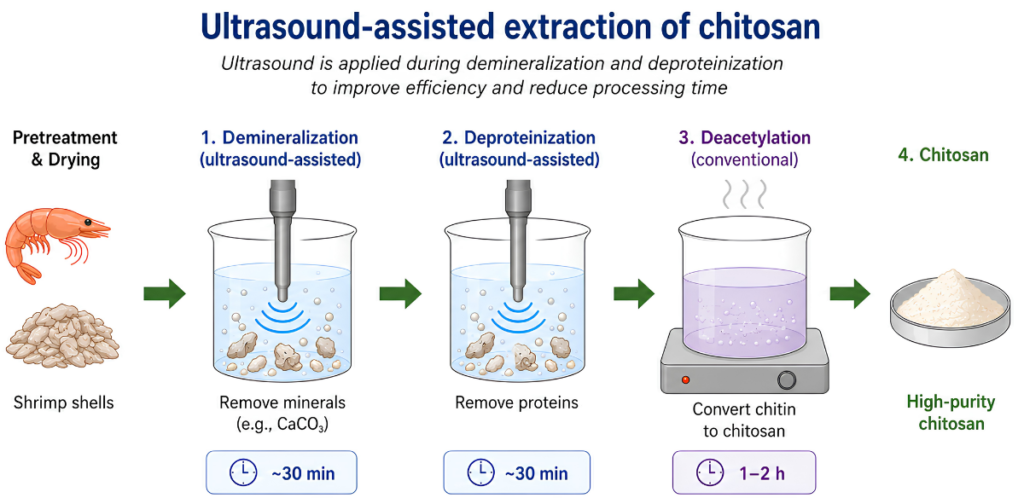
Ултразвук генерише микроскопске кавитационе мехуриће који брзо имплодирају, помажући у разградњи биолошких структура и побољшавајући пренос масе. Коришћење ултразвука смањило је трајање кључних корака екстракције на око 30 минута, знатно брже у односу на многе конвенционалне приступе.
Производња високе чистоће хитозана
Предтретман је такође побољшао квалитет коначног производа. Китозан произведен од претходно третираних љуски показао је веома високу чистоћу (до ~99,91%), уз пожељна својства као што су висок степен деацетилације (~95–96%), добра растворљивост и висока топлотна стабилност.
Заједно, предтретман и екстракција потпомогнута ултразвуком нуде ефикаснији начин претварања отпада од љуске шкампа у вредне биоматеријале. Овај приступ подржава циркуларну биоекономију, где се нуспроизводи прераде рибе и других морских плодова претварају у корисне производе уместо да се одбацују.