
Am 11. Juni 2026 versammelten sich 52 junge Teilnehmer im Starli-Vergnügungspark in Novi Sad zu zwei interaktiven Workshops, die von der Kinder-Umweltakademie und dem Institut für organisiert wurden. Lebensmitteltechnologie in Novi Sad, Universität Novi Sad (FINS), und das IMPRESS-Projekt.
Unter dem Titel “Grüne und blaue Detektive lösen gemeinsam ein Öko-Mysterium” Die Workshops luden sieben- und achtjährige Kinder dazu ein, die Zusammenhänge zwischen Wasserressourcen, Umweltschutz, Müllvermeidung und der Kreislaufwirtschaft zu erkunden.
Den blauen Hinweisen folgen
Der erste Teil des Workshops führte die Kinder in die Rolle der “Blauen Detektive” ein.”
Durch Spiele, Diskussionen und Erkundungen untersuchten sie die in Flüssen und Meeren zu findenden Naturschätze, darunter Tiere, Algen und andere aquatische Ressourcen. Die Kinder überlegten, warum diese Ressourcen geschützt werden müssen und wie sie verantwortungsvoll genutzt werden können.
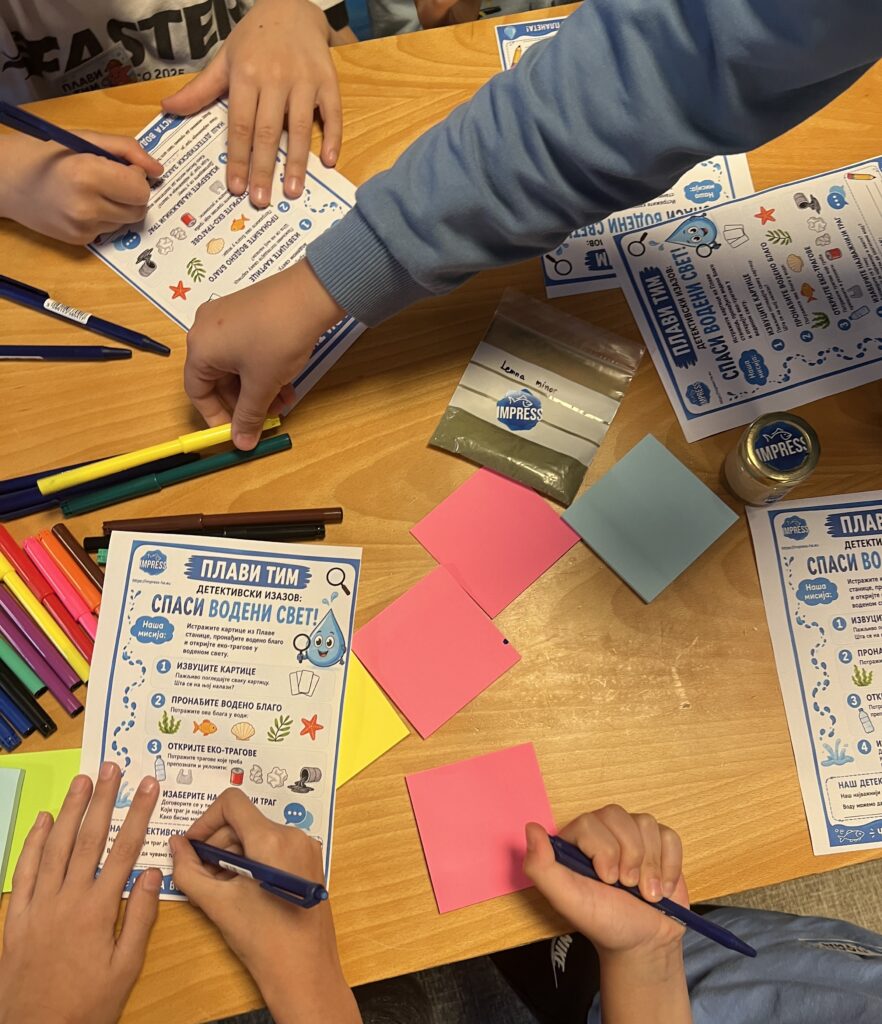
Eine der faszinierendsten Entdeckungen war, dass Algen und andere Wasserorganismen nicht nur wichtige Bestandteile natürlicher Ökosysteme sind, sondern auch zur Entwicklung nützlicher Produkte wie Lebensmitteln und nachhaltigerer Verpackungsmaterialien genutzt werden können.
Für viele Teilnehmer war dies eine völlig neue Sichtweise auf die Wasserumgebung.
Grüne Hinweise, natürliche Ressourcen & nützliche Produkte
Die “Grünen Detektive” führten die Ermittlungen daraufhin fort.
Die Kinder erforschten, wie aquatische Ressourcen in Produkte wie Aufstriche, Würstchen und Kekse sowie in natürliche Lebensmittelverpackungen und Verpackungsmaterialien umgewandelt werden können, die dazu beitragen könnten, herkömmlichen Kunststoff zu ersetzen.
Durch die Kombination der blauen und grünen Hinweise begannen die jungen Detektive, das größere Umweltbild zu erkennen: Der Schutz von Wasserressourcen, die Müllreduzierung, das Recycling von Materialien und das Finden neuer Verwendungszwecke für wertvolle natürliche Ressourcen sind alle miteinander verbunden.
Neugierige Köpfe
Der erste Workshop begrüßte 28 Siebenjährige, während am zweiten 24 Achtjährige teilnahmen.
Einer der stärksten Eindrücke aus beiden Sitzungen war, wie viel die Kinder bereits über Umweltthemen wussten. Sie brachten durchdachte Fragen, kreative Ideen und ein Maß an Umweltbewusstsein mit, das die Organisatoren immer wieder überraschte.
Die Teilnehmer brachten die Workshop-Themen schnell mit ihren eigenen Alltagserfahrungen in Verbindung. Sie sprachen über Recycling zu Hause, das Sauberhalten von Parks und verantwortungsbewusstes Verhalten bei Familienurlauben.
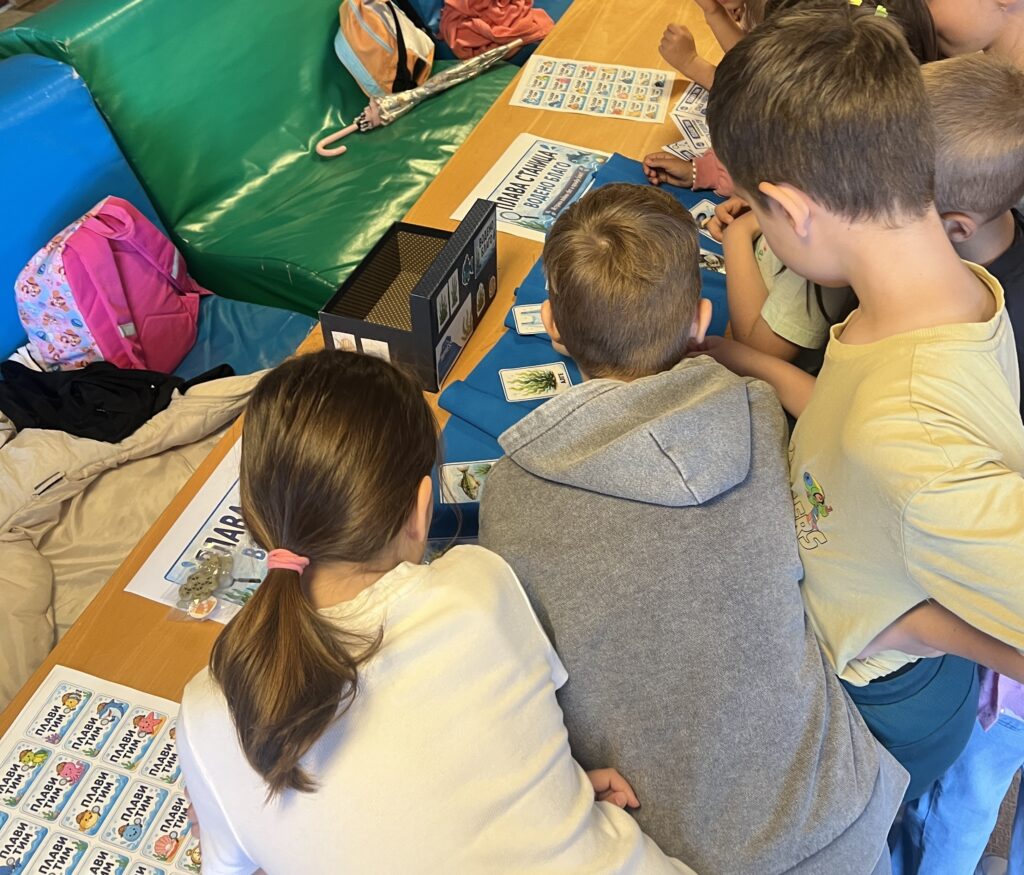
Einige beschrieben, wie sie vermeiden, Müll an Stränden zu hinterlassen, Müll aufheben, wenn sie welchen sehen, und darauf achten, Meerespflanzen und -tiere nicht zu stören.
Lernen durch Untersuchung
Das Detektiv-Rollenspiel wurde zum klaren Favoriten.
Die Übernahme der Rolle junger Wissenschaftler ermutigte die Kinder, das Öko-Mysterium zu beobachten, zu erforschen, Fragen zu stellen und gemeinsam zu lösen. Ihre Neugier und ihre Bereitschaft, sich einzubringen, schufen eine lebendige Lernumgebung, in der sich Umweltbewusstsein und wissenschaftliches Denken spielerisch entwickelten.
Die Workshops ließen auch Raum für die Fantasie, die das Lernen in der Kindheit so unvergesslich macht.
Während einer Diskussion erklärten mehrere Kinder zuversichtlich, dass die Hauptbewohner des Meeres SpongeBob und seine Freunde seien. Der Moment fing den Geist des Tages perfekt ein: eine Kombination aus wachsendem Umweltwissen, wissenschaftlicher Neugier und Fantasie.
Aufbau eines Umweltbewusstseins von frühester Kindheit an
Die Workshops verdeutlichten den Wert der Vermittlung von Konzepten zur Nachhaltigkeit und Kreislaufwirtschaft in frühem Alter. Durch die Verknüpfung aquatischer Ressourcen mit vertrauten Produkten, täglichen Gewohnheiten und spielerischen Untersuchungen trugen die Aktivitäten dazu bei, dass Kinder erkennen, dass der Schutz der Umwelt mit den Entscheidungen verknüpft ist, die die Menschen jeden Tag treffen.
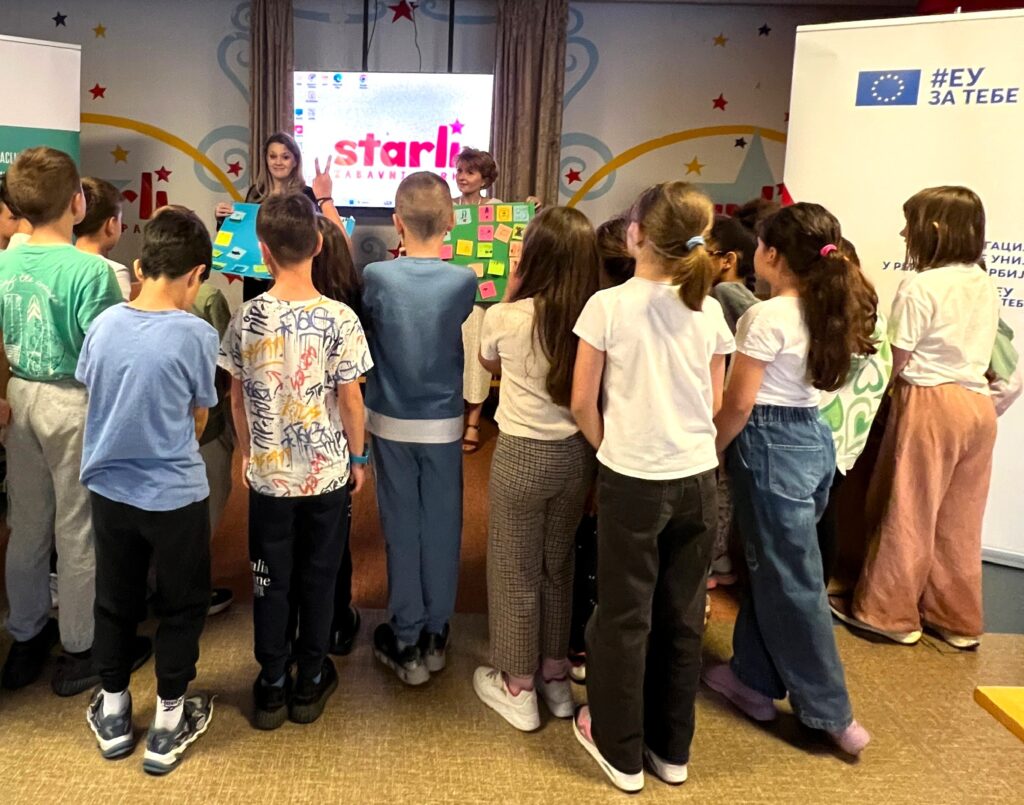
Die jungen Detektive gingen mit einem besseren Verständnis dafür, wie Wasserressourcen geschützt, Abfall reduziert und natürliche Materialien verantwortungsvoller genutzt werden können.
Ebenso wichtig ist, dass sie gezeigt haben, dass Kinder keine passiven Beobachter von Umweltherausforderungen sind. Sie sind neugierig, informiert und bereit, Ideen für eine sauberere und nachhaltigere Zukunft einzubringen.
___________
Zur Verfügung gestellt vom Institut für Lebensmitteltechnologie in Novi Sad, Universität Novi Sad (FINS).
Bearbeitet für die IMPRESSUM Website.